

SymptomWater left after the cycle
Likely causeDebris in the filter
Safe checkRinse the filter
Standing water after a cycle usually points to a drainage restriction. Here is what you can safely check.

When a dishwasher will not drain, the first suspects are a clogged filter, a kinked drain hose, or a recently installed garbage disposal. Turn power off at the breaker and the water supply off before you look. If it hums with no water moving, grinds, or makes no pump sound, stop and book a diagnosis.
A dishwasher that leaves water standing in the tub throws off the whole household routine. Still, pooled water does not tell you which part has failed, so begin with observations that are safe to make, can be repeated, and will come in handy if you later book a Maytag service visit.
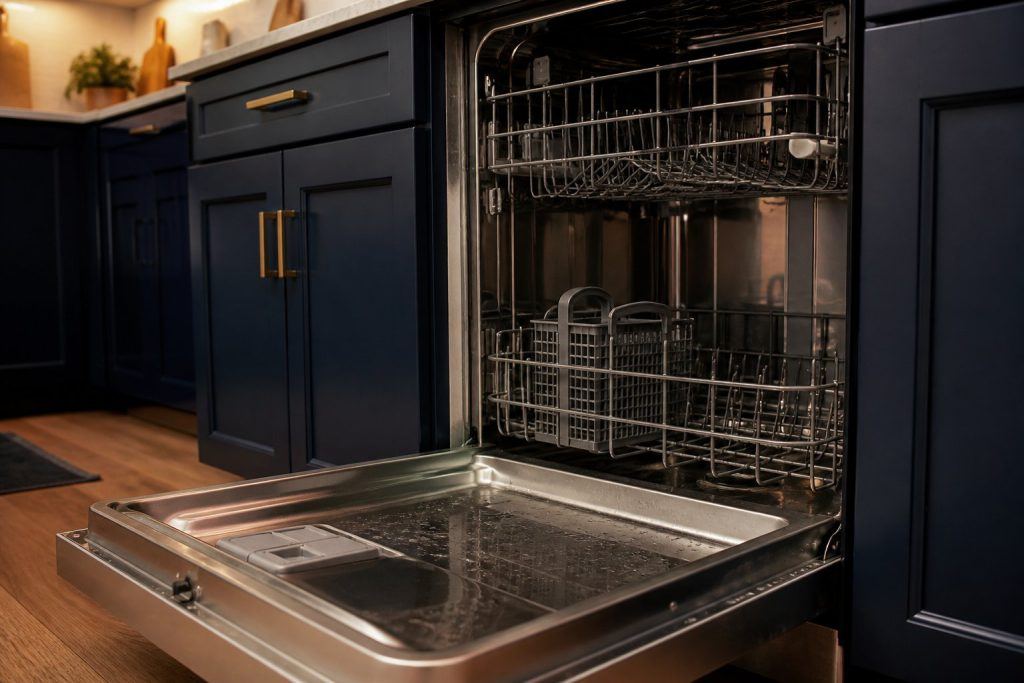
Stop the cycle if it is still running, give the water a moment to settle, then take out the accessible filter as the manual describes and rinse it. Check with the dishwasher sitting in its usual position, and never force a panel, fitting or control. When a small adjustment changes the outcome, run one normal cycle before you decide what the cause was.
A bend you can see in the reachable drain hose, or a disposer hookup added not long ago, may account for the poor drainage without any sign of a bad pump. Pay attention to when it happens: on every cycle, only with certain loads or settings, or once the machine has been going for a while. Noting that is worth more than restarting the dishwasher again and again. If water still sits in the tub after you have handled the filter and hose, quit running further drain cycles, since each attempt sends more water toward areas an owner should not reach into.
Maytag's drainage page links sound to cause. A steady hum with no water movement can mean a jammed impeller, grinding suggests hard debris such as glass at the pump, and no pump sound can point to an electrical or control issue. Remove and clean the filter, and look in the sump for labels, seeds, toothpicks, or glass. Use a soft brush, no abrasive pads.
The use-and-care manual covers controls, filter access and upkeep intervals for your particular model, so keep it handy. Limit cleaning to the parts it calls user-serviceable, stick with the cleaning products it recommends, and put each removable piece back in the position it was built to sit in.
Prior to another attempt, clear whatever is in the way, lighten an unusually full load, and confirm that nothing is limiting air movement, the water supply or the door's clearance. Repeated resets are best avoided, because they can mask a fault that comes and goes and could leave water, heat or pressure in places they should not be.
Cancel the cycle if needed, allow the tub to settle, and follow the manual to remove and rinse the accessible filter.
Only if there is no burning smell, smoke, sparking, gas odor, water near electricity, or other safety warning. Otherwise stop and arrange service.
Book a diagnosis when the safe checks above do not resolve standing water in a dishwasher, or when the next step would require opening the appliance or testing internal parts.
Share a few details and we’ll confirm an appointment. Prefer to talk? Call us and we’ll help right away.