

Warning signScreen packed with lint
What to doEmpty it each load
AvoidUsing the dryer without it
Clean lint screens and clear venting improve dry times and keep your laundry safer.

A dryer vent usually needs attention when loads come out warm but damp, the laundry area feels hot or humid, or lint collects around the door seal. Clean the lint screen after every load, make sure the visible duct is metal and not crushed, and clear the outdoor hood. If drying stays slow after that, the restriction may be further along the run or inside the dryer, and that is the point to book a visit.
Slow drying and a warm laundry room are easy to blame on the dryer itself, though one symptom cannot identify a failed part. Work through safe, repeatable observations first, because they also help if a Maytag service visit becomes necessary.
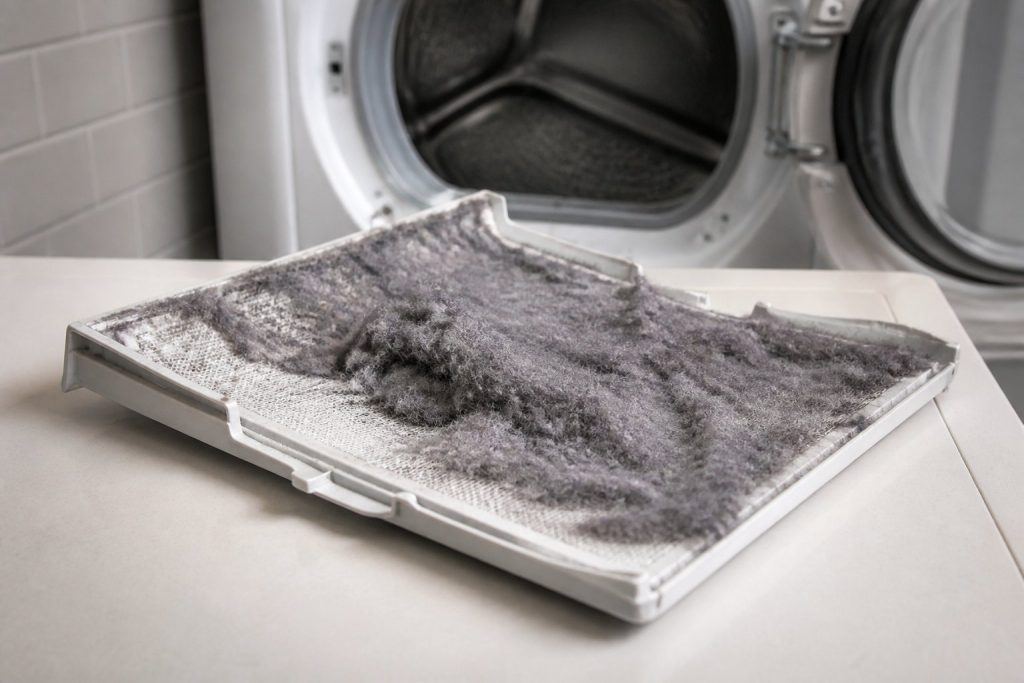
Empty the lint screen after every load and look over only the part of the vent route you can see, plus the flap outside. Keep the dryer in its usual position and do not force panels, fittings, or controls. Should a simple adjustment change the outcome, run one ordinary load before drawing a conclusion.
Cycles that run long, clothes that stay hot, or lint showing at the outside outlet all suggest airflow is restricted and needs attention. Note the pattern: every load, one type of load or setting, or only after the dryer has been going a while. That information beats restarting it again and again.
The Maytag venting help page recommends rigid or flexible metal duct and advises against foil or plastic, because those can collapse and trap lint. It also describes a 4-inch heavy-metal duct, with the outdoor hood kept at least 12 inches from the ground and from obstructions. Total length matters as well: many dryers work best when the equivalent vent length stays under 35 feet, and every 90-degree elbow counts as extra resistance. Your own installation instructions set the exact limit for your model.
Overly long or twisting runs shorten dryer life, reduce performance, and raise energy use, so a long cycle is sometimes a layout problem rather than a failing part. Clean the whole run to the outside every one to two years, and sooner if drying performance drops.
Controls, filter access, and care intervals differ by model, so your use-and-care manual has the final say. Clean only the parts it identifies as owner-serviceable, use the cleaners it suggests, and seat every removable part as designed.
Prior to another load, clear obstructions, reduce an unusually heavy load, and confirm that airflow and door clearance are not blocked. Repeated resets are best avoided, since they can cover up an intermittent fault and leave heat or moisture where it should not collect.
Clean the lint screen every load and inspect only the accessible portion of the vent path and exterior flap.
Only if there is no burning smell, smoke, sparking, gas odor, water near electricity, or other safety warning. Otherwise stop and arrange service.
Book a diagnosis when the safe checks above do not resolve maytag dryer vent care, or when the next step would require opening the appliance or testing internal parts.
Share a few details and we’ll confirm an appointment. Prefer to talk? Call us and we’ll help right away.