

SignSmell of gas
ResponseGet out and call the provider
Do notFlip switches
Gas appliances require careful everyday habits and immediate action for any gas odor.

If you smell gas, do not investigate: leave the building and call your gas supplier or emergency services from outside. For everything else, gas appliance safety comes down to following the manual, keeping burners and ventilation clear, and leaving ignition, valves, and gas fittings to a qualified technician.
Questions about gas appliances rightly make people uneasy, and they cut into a normal day. A symptom alone does not point to a failed part, so begin with safe, repeatable observations that will be helpful if you later book a Maytag service visit.
In the case of a gas odor, get out of the area and phone the gas provider or emergency service once you are somewhere safe; do not start your own inspection. For anything less urgent, look with the appliance left in place and do not force panels, fittings, or controls.
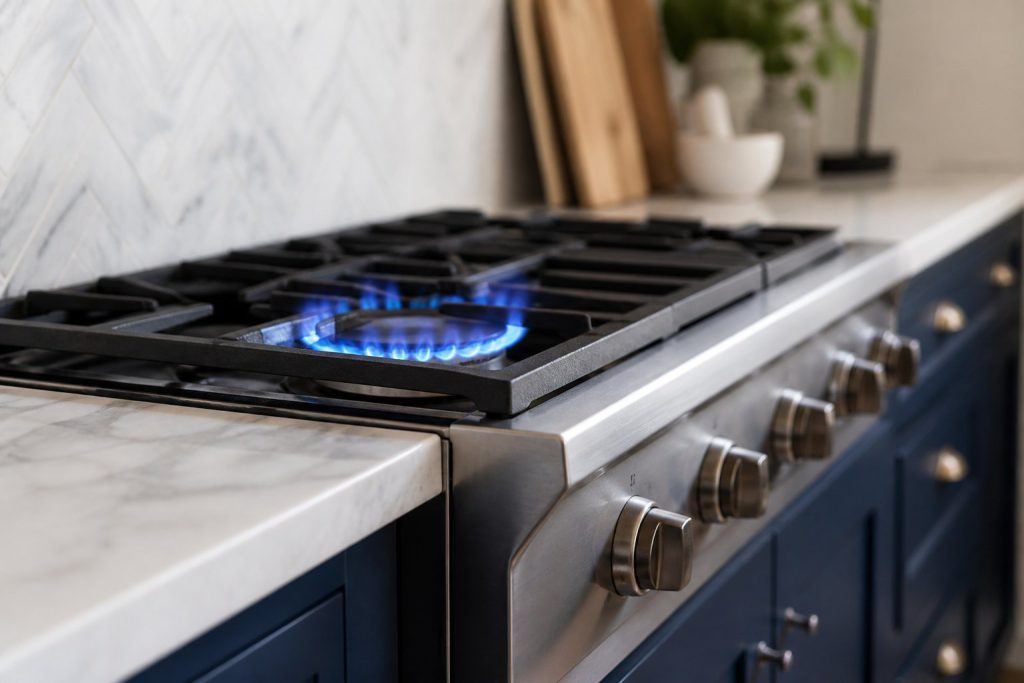
In everyday use, watch for a steady blue flame and burners that are clean, and treat ignition trouble, odd-looking flames, and any gas smell as a job for a professional. Notice if a problem appears every time or only in certain conditions; that pattern is more helpful than restarting. Your range or dryer manual should be nearby, because it carries the warnings and care steps for your model.
The owner's manuals for some Maytag gas ranges and dryers lay out the same steps when gas is smelled. Light no appliance, touch no electrical switch, get out of the building, and phone the gas supplier from a neighbor's home. Should the supplier not answer, call the fire department.
Those manuals also note that smell alone will not always reveal a gas leak, and that gas suppliers recommend an approved gas detector. They describe installation and service as work for a qualified agency.
Wording varies by model, so check your own manual.
The use-and-care manual describes the controls, ventilation needs, and care for your model. Clean only surfaces it calls user-serviceable, use the recommended products, and leave gas fittings and valves entirely alone.
Before the appliance is lit again, keep the burner area and vents clear of anything stored or draped over them. Trying again and again is risky: it can disguise a fault that comes and goes and may leave gas where it should not be.
If there is a gas odor, leave the area and contact the gas provider or emergency service from a safe location; do not begin a home inspection.
Only if there is no burning smell, smoke, sparking, gas odor, water near electricity, or other safety warning. Otherwise stop and arrange service.
Book a diagnosis when the safe checks above do not resolve gas appliance safety, or when the next step would require opening the appliance or testing internal parts.
Share a few details and we’ll confirm an appointment. Prefer to talk? Call us and we’ll help right away.