

ConditionWater at an outlet
Safe actionSwitch the breaker off from a dry spot
AvoidHandling the plug
Water near an appliance or outlet needs a careful response that puts electrical safety first.

When water meets an electrical appliance, the first priority is power, not the leak. If you can reach a dry breaker panel safely, switch off the circuit, stop using the appliance, and keep the area clear until the source is identified. Never touch a wet plug, outlet, or control.
Finding water near an electrical appliance is stressful, and a drip on its own does not tell you which component gave out. Begin with notes you can gather safely and repeat, since they will matter if you book a Maytag visit afterward.
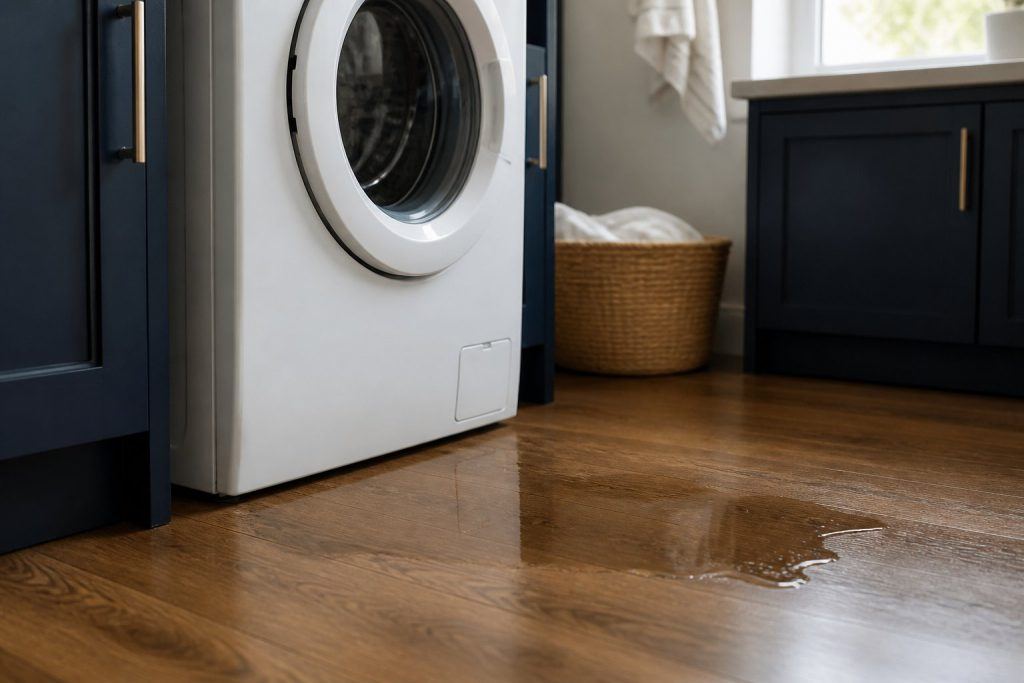
Stay away from any wet appliance, plug, or outlet. When a dry breaker panel is within safe reach, switch that circuit off before you go near the spill. Look the unit over where it sits, without prying at panels, fittings, or controls. Should a small adjustment change what happens, run one ordinary cycle before concluding anything. Only once power is off should you contain and mop up the water, and never step toward a live outlet across a soaked floor.
A hose that has simply worked loose is a minor matter, but water reaching an outlet, a wiring area, or the base of the unit calls for real care. Ask whether the leak shows up every time, only with certain loads or settings, or after the machine has run for a while. Knowing that pattern tells you more than restarting over and over.
On a dishwasher, Maytag's leak guidance links location to likely cause. Water at the door or front can relate to the gasket, too much detergent, or a spray arm, while water at the bottom center can involve the pump seal or sump. Water behind or under the cabinet suggests the hose connections, inlet valve, or drain line.
On a top-load washer, leaks underneath send you toward the inlet hose connections and hose washers. Adding clothes to a full-level cycle can also cause overflow. On a front-load washer, over-tightened hose fittings or hot and cold hoses on the wrong ports can lead to leaks or condensation.
A location clue is only a starting point. It narrows the search without confirming a failed part.
Model-specific details such as where the filters are, which controls exist, and how often to service them live in your use-and-care guide. Clean only what that guide labels owner-serviceable, choose its recommended products, and reseat every removable component in its intended place.
Prior to another run, clear anything in the way, lighten an oversized load, and confirm that airflow, the water supply, and door clearance are unobstructed. Resist resetting again and again; that can mask an intermittent fault and leave water, heat, or pressure sitting somewhere it doesn't belong.
Do not touch a wet appliance, plug, or outlet. If it is safe to access a dry breaker panel, turn off the circuit there before approaching the spill.
Only if there is no burning smell, smoke, sparking, gas odor, water near electricity, or other safety warning. Otherwise stop and arrange service.
Book a diagnosis when the safe checks above do not resolve water leaking near an electrical appliance, or when the next step would require opening the appliance or testing internal parts.
Share a few details and we’ll confirm an appointment. Prefer to talk? Call us and we’ll help right away.