

SymptomA second cycle every time
Likely causeLint blocking the screen
Safe checkWipe the screen clear
Slow Maytag dryer cycles often trace back to restricted airflow. Start with these safe checks.

Slow drying usually means moist air is not leaving the dryer, so start with the lint screen, the drum load, and the visible vent hose and outdoor hood. Run a heated cycle empty for about five minutes to check that the dryer makes heat at all. Warm-but-damp loads point toward airflow, while no heat points toward a part that needs testing.
Towels that need a second or third trip through a Maytag dryer waste time and power, and the slow drying alone does not say which part is responsible. Begin with checks that are safe and repeatable, because they will help if you later schedule a Maytag service visit.
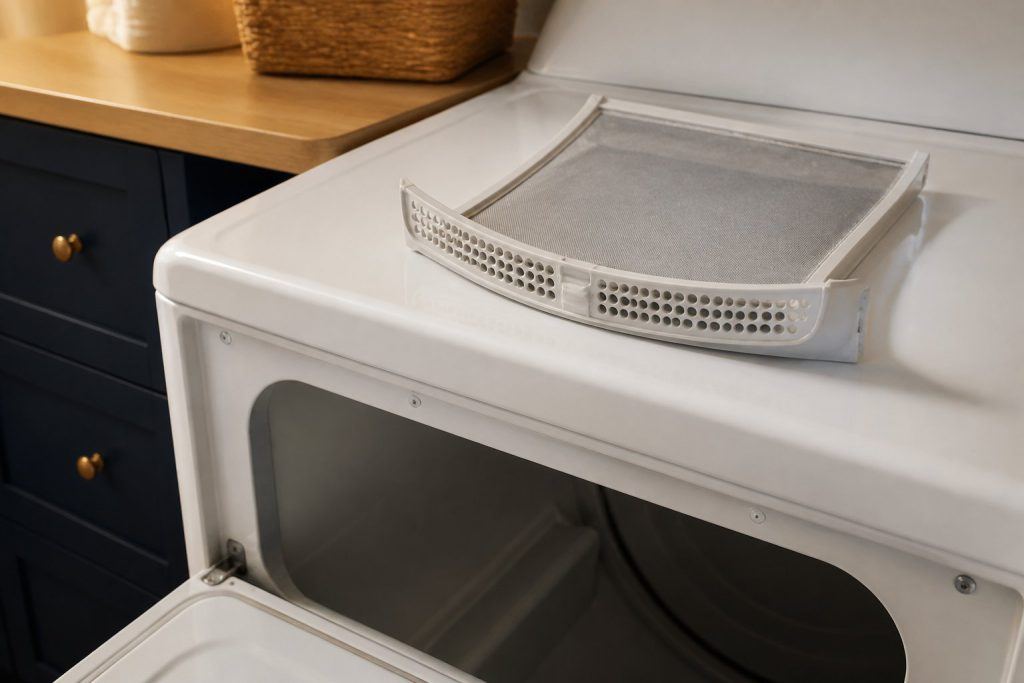
Empty the lint screen, lighten a packed drum, and look over the vent hose you can see for crushing or tight kinks. Carry this out with the dryer in its usual spot, and do not pry at a panel, fitting, or control. If a basic fix changes what happens, run a single regular load before you settle on a conclusion.
Extended cycles, laundry that comes out unusually hot, and a feeble flap on the outside vent all hint that humid air is struggling to escape. Pay attention to whether it happens with every load, only with one kind of load or setting, or only after the dryer has been running a while. That detail counts for more than starting it over and over.
Maytag's support page suggests running a heated cycle with the drum empty for five minutes, then opening the door to feel for heat. If it is hot, the heating side is working and the focus shifts to airflow. If there is no heat, remember that electric dryers typically use a 240 V outlet with two breakers, and gas models need the gas valve open. A tripped breaker is worth checking before concluding anything else.
Warning signs of a restricted vent include warm-but-damp loads after a full cycle, heat and humidity in the laundry area, and lint around the door seal or lint housing.
The manual that came with your dryer is the place for model-specific controls, how the lint filter is reached, and the upkeep intervals. Restrict cleaning to components it calls owner-serviceable, pick only the cleaning products it names, and refit all removable parts in the position they were designed for.
Before you run it once more, remove whatever is in the way, cut back a very full drum, and be sure nothing is pinching air flow or door clearance. Pressing reset time and again is a bad habit; it can hide a fault that comes and goes and leave heat in the wrong place.
Clean the lint screen, reduce an overloaded drum, and inspect the visible vent hose for crushing or sharp kinks.
Only if there is no burning smell, smoke, sparking, gas odor, water near electricity, or other safety warning. Otherwise stop and arrange service.
Book a diagnosis when the safe checks above do not resolve a maytag dryer taking too long, or when the next step would require opening the appliance or testing internal parts.
Share a few details and we’ll confirm an appointment. Prefer to talk? Call us and we’ll help right away.