

SymptomFresh-food side runs warm
Likely causeRestricted air movement
Safe checkMove food away from interior vents
A calm, safe walkthrough of common reasons a refrigerator stops cooling — and when to call a technician.

When a Maytag refrigerator is not cooling, check the basics first: that it is on, that Showroom or Demo mode is off, the temperature controls, and whether the doors seal and vents are clear. Settings, airflow, and seals are the first things to rule out. If both compartments are warm after those checks, or the compressor seems silent, book a diagnosis.
Warm food in a Maytag refrigerator is stressful, and one symptom never tells you which part has failed. Begin with observations that are safe to make, that you can repeat, and that will be worth having if a Maytag service visit follows.
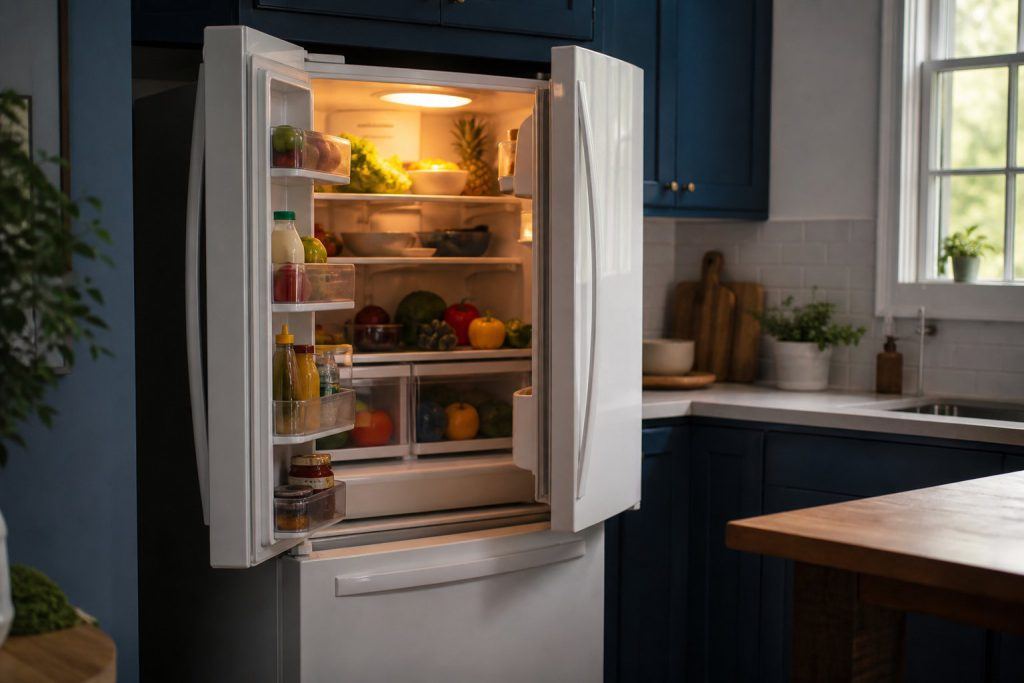
Start by confirming nobody turned the controls warmer, both doors shut all the way, and groceries are not pressed against the vents inside. Leave the unit where it stands and do not force any panel, fitting, or knob. When a small adjustment changes the result, give the refrigerator one normal run before you decide what the problem was.
Make a note if the freezer is cold but the fresh-food side is warm, because that split often points to airflow or defrost. Then look for a pattern: does it happen constantly, only with a certain load or setting, or only after the unit has been on for a while? Knowing that is worth more than unplugging and restarting again and again. Protect perishables meanwhile, and move them into a cooler if the compartments stay warm.
Maytag's control guidance suggests starting points of 37F for fresh food, with 32 to 40F as the safe range, and 0F for the freezer. Change one increment at a time and wait 24 hours between adjustments. Use an appliance thermometer in the center of each compartment. Some units must be restarted after an outage or surge, and Showroom or Demo mode disables cooling.
On top-freezer models, the airflow control on the back freezer wall should be set to Recommended. Allow 24 hours after installation, and keep food away from freezer vents.
Your model's use-and-care guide lists its controls, how to reach the filter, and how often to maintain it. Limit cleaning to parts the guide calls owner-serviceable, use only the cleaners it recommends, and put each removable part back in the position it was made to occupy.
Prior to another attempt, remove anything in the way, cut back an oversized load, and verify that nothing is choking air flow or crowding the door. Frequent resets are a poor habit because they can cover up a fault that appears only now and then.
Confirm that the controls have not been set warmer, the doors close fully, and food is not blocking interior air vents.
Only if there is no burning smell, smoke, sparking, gas odor, water near electricity, or other safety warning. Otherwise stop and arrange service.
Book a diagnosis when the safe checks above do not resolve a refrigerator that is not cooling as expected, or when the next step would require opening the appliance or testing internal parts.
Share a few details and we’ll confirm an appointment. Prefer to talk? Call us and we’ll help right away.